
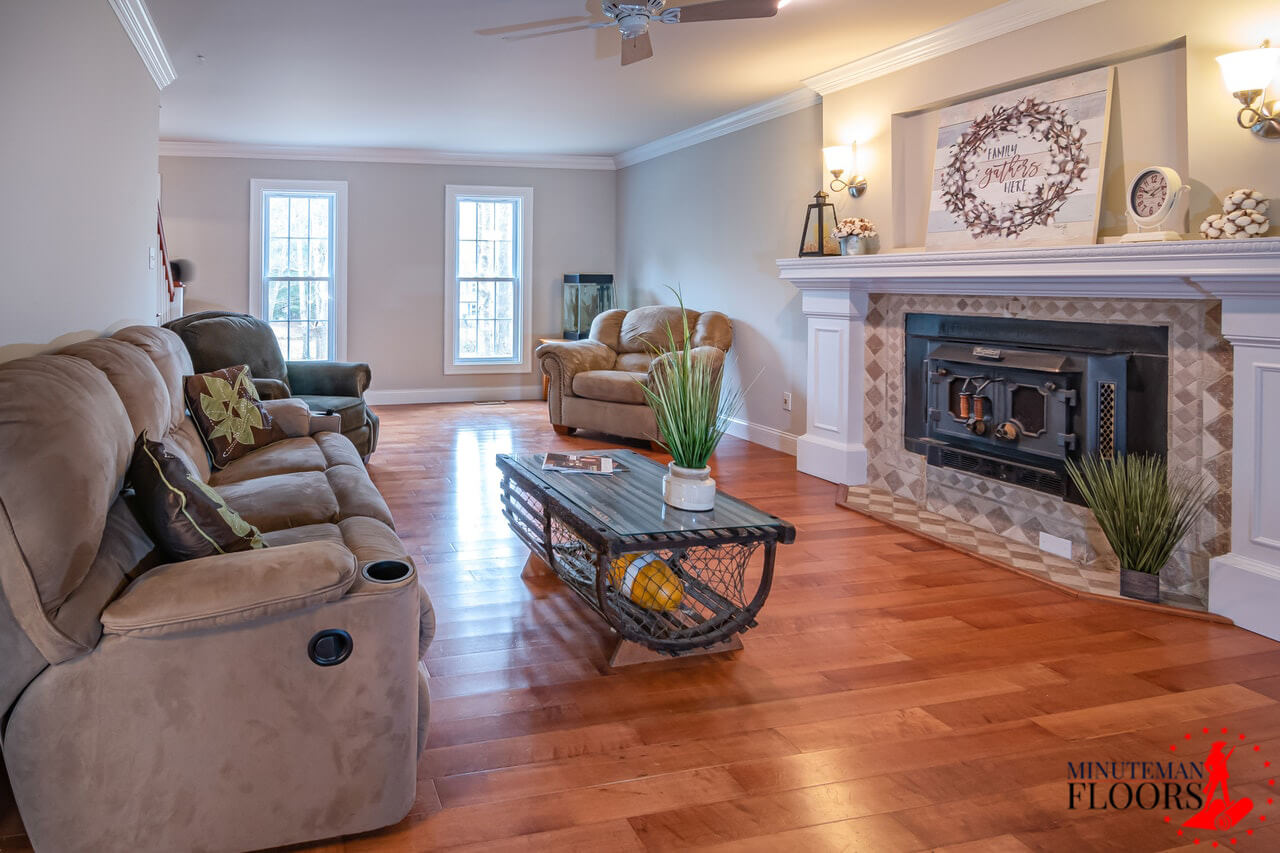
In New Hampshire, luxury vinyl plank (LVP) is usually the better choice for basements, kitchens, and entryways because it handles moisture and winter slush. Hardwood is better for living areas where you want refinishable, long-lived floors, provided you manage humidity. Both perform well in Manchester homes when installed with the right subfloor preparation and acclimation.
Why New Hampshire Climate Changes the Decision
Flooring in New Hampshire lives through large seasonal swings. Winters are cold and dry indoors from heating. Summers are humid. Wood is a natural material that absorbs and releases moisture, so its dimensions change with the seasons. Vinyl is far more stable. That one fact shapes most of the comparison.
Hardwood Flooring in New Hampshire
Advantages
- Refinishable: solid hardwood can be sanded and refinished several times, extending its life across decades.
- Resale appeal: buyers often view hardwood as a premium feature.
- Warmth and character: natural grain and color variation that suits New England homes.
- Repairable: damaged boards can be replaced or spot-repaired.
Limitations
- Moisture sensitivity: standing water, leaks, and high humidity can cause cupping, warping, or staining.
- Seasonal movement: gaps may appear between boards in dry winter air, then close in summer.
- Scratching and denting: softer species show wear from pets, furniture, and heavy traffic.
- Basement limitations: solid hardwood is generally not recommended below grade. Engineered wood can sometimes be used, depending on conditions.
Luxury Vinyl Flooring in New Hampshire
Advantages
- Water resistance: most LVP resists spills, tracked-in snow, and pet accidents.
- Dimensional stability: it does not expand and contract like wood through seasonal changes.
- Durable wear layer: resists scratches, scuffs, and daily traffic.
- Comfort underfoot: softer and quieter than hard surfaces, depending on the product and underlayment.
- Faster installation: many products install quickly with less disruption.
Limitations
- Not refinishable: worn or damaged planks are replaced rather than sanded.
- Subfloor sensitivity: imperfections can telegraph through thinner products.
- Quality varies widely: wear layer thickness and core construction differ across brands.
Side-by-Side by Room
- Basement: LVP, because moisture is the main risk.
- Kitchen: LVP for water resistance, or hardwood if you are diligent about spills.
- Mudroom and entry: LVP or tile, because winter salt and meltwater are hard on wood.
- Living room and bedrooms: hardwood for a long-lived, refinishable surface, or LVP for lower maintenance.
- Bathrooms: LVP or tile.
- Rental property: LVP for fast turnover and durability.
Cost Over Time
Upfront cost depends on product grade, square footage, and subfloor condition, so request an in-home measurement. The long-term picture matters more:
- Hardwood usually costs more to install but can be refinished, giving it a very long service life.
- LVP usually costs less to install and maintain, but you replace it instead of refinishing it.
- Poor subfloor preparation can add cost to either option later, because failures show up as gaps, squeaks, or lifting.
Installation Details That Decide Success
Acclimation
Wood and some other flooring should rest in the home to reach its normal moisture level before installation. Skipping this causes gaps or buckling later.
Subfloor Preparation
The subfloor must be flat, clean, dry, and structurally sound. High spots, low spots, and moisture all cause problems.
Moisture Testing
Concrete and basement slabs should be tested before installing wood or vinyl. This is especially important in New England basements.
Humidity Control
A humidifier in winter and a dehumidifier in summer help protect hardwood from seasonal movement.
Care and Maintenance
- Hardwood: sweep regularly, clean with products made for wood, wipe spills immediately, and use mats at entries.
- LVP: sweep or vacuum and damp-mop with a vinyl-safe cleaner. Avoid abrasive tools.
- Both: add felt pads under furniture, and trim pets' nails.
How to Decide
- List each room and its moisture exposure.
- Decide whether you want the option to refinish in the future.
- Consider pets, children, and traffic levels.
- Set a budget that includes subfloor work and removal of old flooring.
- Get an in-home consultation to measure, test, and compare samples.
Key Takeaways
- LVP suits wet and high-traffic areas, including basements and entries.
- Hardwood suits living areas where refinishing matters.
- Subfloor prep, moisture testing, and acclimation matter as much as the product.
- Seasonal humidity is the main variable in New Hampshire.
Frequently Asked Questions
Is engineered hardwood a good middle option?
Engineered hardwood has a real wood surface over a layered core that moves less with humidity than solid planks. It can work in more locations than solid hardwood, though thinner wear layers limit how many times it can be refinished.
Can I install flooring over my existing floor?
Some floating products can go over existing flat, sound flooring, but removal is often the better choice. Hidden damage, uneven surfaces, and moisture problems get covered rather than fixed, and they can cause failures later.
Is vinyl safe for homes with pets?
Yes, quality vinyl resists accidents and scratches well. Choose a thicker wear layer for dogs and keep nails trimmed. Hardwood can show scratches more readily, though minor ones can be refinished.
Will radiant heat affect my choice?
Radiant heat limits which products are suitable and how they should be installed. Not every wood or vinyl product is approved for use over heated floors, so confirm with the manufacturer and your installer before purchase.
How long does installation take?
Many rooms can be done in a day or two, while whole-home projects, refinishing with curing time, or jobs requiring subfloor repair take longer. Moving furniture and removing old flooring add time.
What about carpet and tile?
Carpet adds warmth and sound absorption in bedrooms. Tile resists water and is common in bathrooms and entries. Many homes use a mix of materials by room, with transitions planned in advance.
Can I finance or phase the project?
Many homeowners phase projects room by room. Plan the order so the materials and transitions stay consistent, and ask about product availability so later phases match.
Next Step
Minuteman Floors serves Manchester and surrounding New Hampshire communities with free in-home consultations. Browse our hardwood flooring and vinyl flooring options, or learn about floor refinishing.
To schedule a consultation, call (603) 782-1942.